
Olmsted County Unclaimed Money
Olmsted County residents, including those in Rochester and surrounding communities, may have unclaimed money held by the state of Minnesota. The Minnesota Department of Commerce collects dormant bank accounts, uncashed checks, unpaid insurance proceeds, and other financial assets from businesses statewide and holds them until the rightful owner steps forward. Searching costs nothing, claiming costs nothing, and the state keeps property indefinitely, so there is no deadline to look for what may belong to you or someone in your family.
Olmsted County Overview
Finding Olmsted County Unclaimed Money
Minnesota manages all unclaimed property at the state level. Olmsted County does not maintain its own unclaimed money database. When a bank, insurer, utility, brokerage, or other financial institution loses contact with a person tied to an Olmsted County address, it reports those dormant funds to the Minnesota Department of Commerce. The state holds them until the owner files a claim. There is no separate county system to check.
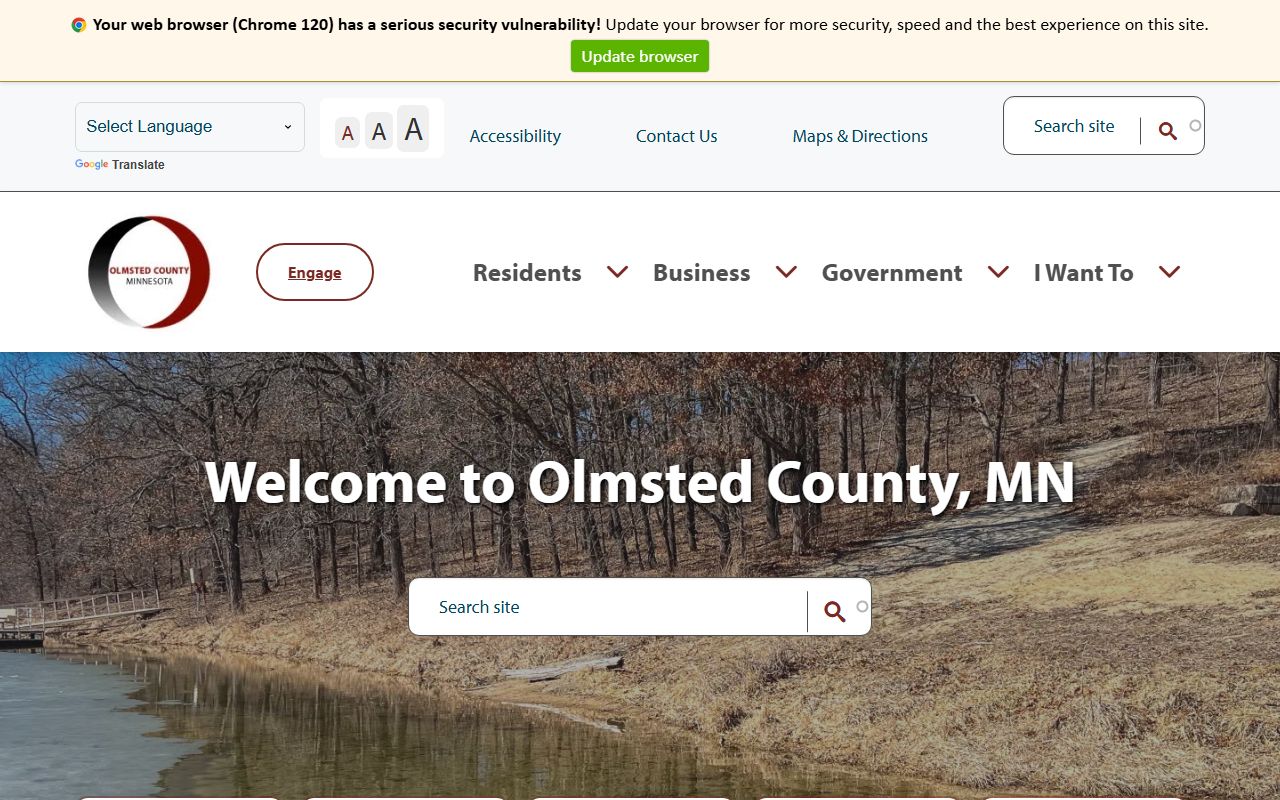
The Olmsted County official website serves residents with local government resources, department contacts, and county services. It does not handle unclaimed property in any way. For unclaimed money specifically, the state portal is the only official source.
Below is a screenshot of the Olmsted County official website, which provides local government information for Rochester and surrounding communities.
To search for unclaimed money, visit the state portal at minnesota.findyourunclaimedproperty.com. It is free, open around the clock, and covers all 87 Minnesota counties including Olmsted.
How Olmsted County Residents Search the Portal
Go to the state portal and type your last name into the search box. No account is needed. Results load within seconds. Look through the full list before deciding nothing applies to you. It is easy to skip past an entry that is yours, especially when there are multiple results with the same surname.
Name variations deserve attention. If you have changed your name for any reason, run each version separately. Maiden names, names from previous marriages, and commonly misspelled versions of your name all need their own searches. The state records property under whatever name the holder used when the account went dormant, which could differ from your current legal name.
Business names matter too. Rochester and the rest of Olmsted County have a large number of businesses and professionals. If you have ever held an ownership stake in a business that is now closed, search those names separately. Dissolved companies, old LLCs, and former partnerships can have unclaimed funds at the state. Use the full legal name and any trade name the business operated under.
For searches that span state lines, use MissingMoney.com. This free tool pulls from multiple state databases at once. It is especially useful if you have lived or worked outside Minnesota before moving to Olmsted County. Do not pay a finder service. The state search is free and gives the same results.
Types of Unclaimed Property in Olmsted County
Bank accounts are the top source of unclaimed property in the state. Checking, savings, money market accounts, and CDs go unclaimed after three years of no activity. The balance transfers to the state, but the owner's name and last known address stay on the record for as long as needed.
Uncashed checks represent a large share of claims. Payroll checks sent to outdated addresses, insurance refund checks, utility deposit returns, dividend payments, and corporate settlement checks all end up at the state when they go uncashed. People may never know these were sent. A former employer or financial institution may have issued a check years ago that was returned or never reached the right person.
Insurance proceeds, especially life insurance death benefits, account for a significant category. When a policyholder dies and the insurer cannot locate the beneficiary, the death benefit eventually moves to the state. Annuity proceeds, health insurance overpayments, and accident settlement funds follow the same path. Safe deposit box contents have a five-year dormancy period before transfer. Most other financial property reaches the state after three years of no contact. A 2019 law update requires the state to pay interest on interest-bearing property, meaning some older unclaimed accounts have grown in value since the transfer date.
Other property types include stock certificates, mutual fund balances, brokerage account holdings, utility deposits, credit balances on closed retail accounts, and money orders. All of it is covered by Minnesota Statutes Chapter 345.
Claiming Olmsted County Unclaimed Money
Claiming property follows four steps. First, search the portal and find property in your name. Second, click to start a claim and fill in your identifying details. Third, collect the documents the state requests and upload or mail them. Fourth, track the claim using the Claim ID provided at submission.
Standard claims require a government-issued photo ID. A driver's license or passport both qualify. If you are claiming property for a deceased relative, add a death certificate and documentation of your legal standing, such as letters testamentary or a court-issued heir designation. More complex claims or high-value property may require extra supporting documents.
Processing takes up to 90 days. Once that period passes, call 651-539-1545 or 1-800-925-5668. You can also email unclaimed.property@state.mn.us or write to the Minnesota Commerce Department at 85 7th Place East, Suite 280, St. Paul, MN 55101. The full set of claim requirements is at Minnesota Statutes §345.41. The process is entirely free, and no deadline applies to when you can file.
Minnesota Unclaimed Property Law
Minnesota Statutes Chapter 345 governs unclaimed property across the entire state. It sets the dormancy periods for each asset type, defines what qualifies as unclaimed property, and spells out the reporting obligations for holders. The law applies the same way in Olmsted County as in any other part of Minnesota. Banks, insurers, brokerages, utility companies, and other financial institutions all fall under its requirements.
Before reporting property to the state, a holder with assets worth $100 or more must send written notice to the owner's last known address at least 120 days before the annual filing deadline. This gives the owner a window to contact the institution and recover the property before it transfers. Most holders file by November 1. Life insurance companies use an earlier October 1 deadline.
Holders who fail to follow reporting rules face consequences under Minnesota Statutes §345.55. Willful non-compliance can be charged as a misdemeanor or gross misdemeanor. The state can assess 12% interest on amounts wrongly withheld. These penalties apply to institutions, not to property owners filing claims for their own assets.
Additional Resources for Olmsted County
A few other tools can expand your search. The NAUPA Minnesota page summarizes the state program and links to the official search portal. The NAUPA national directory covers all 50 states and several territories, useful if you have financial ties outside Minnesota.
For federal bankruptcy funds, check the U.S. Bankruptcy Court for Minnesota unclaimed funds list. This is separate from the state portal and covers distributions from settled federal bankruptcy cases in the district. The Minnesota State Auditor's unclaimed property guidance explains how public entities handle reporting and gives a useful overview of the system as a whole.
Cities in Olmsted County
Olmsted County residents in Rochester and surrounding communities use the state unclaimed property system.
Nearby Counties
Residents near Olmsted County borders may want to check adjacent county pages as well.