
Access Mower County Unclaimed Money
Mower County residents may have unclaimed money sitting in Minnesota's state fund and not know it. The Minnesota Department of Commerce holds dormant bank accounts, uncashed checks, forgotten insurance proceeds, and other lost financial assets from across the state until the rightful owners come forward. Searching is free, and there is no deadline to claim. Anyone can run a search from home using the state's online portal. Data shows about 1 in 7 Minnesotans has some form of unclaimed property, and the average claim statewide is close to $2,080.
Mower County Overview
Finding Unclaimed Money in Mower County
Minnesota manages all unclaimed property at the state level through the Department of Commerce. Mower County does not operate its own unclaimed property office or database. When a bank, insurance company, utility, or other business in the county loses contact with an account holder and the dormancy period expires, those funds must be transferred to the state. The Department of Commerce holds the money and makes it searchable through a free public portal.
The Mower County official website provides local government services and county information, but unclaimed property is not handled at the county level in Minnesota. The county site shown below is a useful resource for local matters, but for unclaimed money, the state portal is the right destination.

Head to minnesota.findyourunclaimedproperty.com to search the full state unclaimed property database at no cost.
How Mower County Residents Search the Database
Open the state portal at minnesota.findyourunclaimedproperty.com and enter your last name. No registration or login is required. The results draw from the full statewide database in real time. Run a few versions of your name. If you've changed your name, used a nickname, or have a maiden name, search each form separately. Property reported under an old name stays in the database under that name, so a single search can miss a lot.
Businesses are searchable too. If you've owned or operated a business in Mower County, search the business name alongside your personal name. Companies can accumulate unclaimed property just as individuals do. Try the full legal business name and any abbreviated or shortened versions. Inactive partnerships, dissolved corporations, and closed LLCs can all have funds in the state database.
For anyone who has lived in other states, MissingMoney.com provides a free multi-state search endorsed by the National Association of Unclaimed Property Administrators. If you moved to Mower County from out of state, this tool can surface property tied to old addresses elsewhere that the Minnesota portal would not show. The search is free. Do not pay a finder's fee to locate property that is available through free official tools.
Types of Unclaimed Property in Mower County
Bank accounts are the most common source of unclaimed property statewide. When a checking or savings account sits inactive for three years and the bank cannot reach the account holder, the balance transfers to the state. Certificates of deposit, money market accounts, and similar products follow the same process. Credit balances and security deposits that businesses owe to customers but can't deliver also end up in the state fund.
Uncashed checks of many kinds show up in the database regularly. Old refund checks from utility companies, dividend checks from stock holdings, payments from class action settlements, and checks sent to former addresses all flow into the fund when the intended recipient can't be found. When a business closes or merges with another company, outstanding checks sometimes get overlooked and eventually are swept into the unclaimed property process.
Insurance accounts for a significant portion of unclaimed property in counties like Mower. Life insurance payouts go unclaimed when the beneficiary wasn't aware the policy existed or couldn't be located when the claim came due. Annuity payments, premium refunds, and health insurance overpayments are also common. Stocks, dividends, and brokerage account balances round out the typical property types. Safe deposit box contents are surrendered to the state after five years of inactivity. All of this falls under Minnesota Statutes Chapter 345. A 2019 change to this law requires the state to pay interest on interest-bearing property, meaning some older claims carry more value than the original balance. Holders report to the state annually by November 1, with life insurance companies filing by October 1.
How to Claim Mower County Unclaimed Money
Claiming property is a four-step process. First, find your name in the state database. Second, click the property listing to begin a claim and complete the online form with your contact details and your connection to the asset. Third, submit the documents the state requests. A government-issued photo ID is standard for personal claims. For claims on behalf of a deceased person, add a death certificate and documentation of your legal authority, such as letters testamentary, a will, or a notarized affidavit of heirship. Fourth, track your claim using the ID number you receive at submission.
Processing takes up to 90 days. Many claims finish sooner, but the Department of Commerce asks that you wait the full window before following up. If 90 days have passed without resolution, call 651-539-1545. The toll-free number is 1-800-925-5668 for callers outside the Twin Cities area. Email questions to unclaimed.property@state.mn.us or mail documents to Minnesota Commerce Department, 85 7th Place East, Suite 280, St. Paul, MN 55101.
The legal framework for filing is in Minnesota Statutes §345.41. No fees apply at any point. Searching is free. Filing is free. Receiving your property is free. Property held by the state does not expire. Funds reported decades ago are still available to the rightful owner or their heirs.
Minnesota Unclaimed Property Law
Minnesota Statutes Chapter 345 is the governing law for unclaimed property in the state. It applies to every county in Minnesota, including Mower. The law requires all businesses holding financial assets for Minnesota residents to report and transfer dormant funds to the state after the applicable waiting period. Three years is the standard dormancy period for most types of property. Safe deposit boxes have a five-year threshold.
Before transferring funds to the state, a holder must make a reasonable effort to reach the owner. If the property value is $100 or more, written notice must go out at least 120 days before the report is filed. That window gives the owner a chance to respond and claim directly from the holder before the state gets involved. Once the transfer happens, the owner's right to claim remains fully intact and doesn't expire.
Holders that fail to comply with these requirements face penalties under Section 345.55. Willful failure to report can be charged as a gross misdemeanor. The state can also assess 12% interest on amounts that were wrongly withheld. These rules apply to businesses and institutions, not to individuals who are trying to recover their own property.
Additional Resources for Mower County Residents
The NAUPA Minnesota page gives a state-level overview of the unclaimed property program and links to the official search portal. The NAUPA national site covers every state's program and is helpful if you need to search outside Minnesota. MissingMoney.com is a free multi-state search tool that can surface property from multiple states in a single query.
For funds tied to federal bankruptcy proceedings, the U.S. Bankruptcy Court for the District of Minnesota maintains a separate list of unclaimed funds from resolved cases. These don't show up in the state database and require a distinct search. The Minnesota State Auditor's unclaimed property guidance is a useful reference for anyone who wants to understand how government entities in the state manage their unclaimed property obligations.
Mower County Unclaimed Money: Searching Thoroughly
A complete search goes beyond typing your name once. Most people find their current name produces few results and assume there's nothing there. But property can be listed under a name used years ago, a slightly different spelling, or a former business name. Taking 10 minutes to run several variations can make the difference between finding something and missing it.
Checking for relatives who lived in Mower County is also worth the effort. Parents and grandparents who were in the area for years may have had accounts, policies, or deposits that were never settled after they passed. Running their names through the portal is quick and can surface assets that heirs didn't know existed. If you find property belonging to a deceased family member, the claim process is more involved but still manageable. The state provides guidance on what documents to gather for estate and heir claims.
Don't overlook the scale of what's out there. Minnesota returned $4.5 billion in unclaimed property in fiscal year 2024. That's across the full state, but it reflects how much goes unnoticed every year. A large part of that comes from routine account closures, bank mergers, and business changes that residents never followed up on. Checking takes almost no time, and the potential return is real.
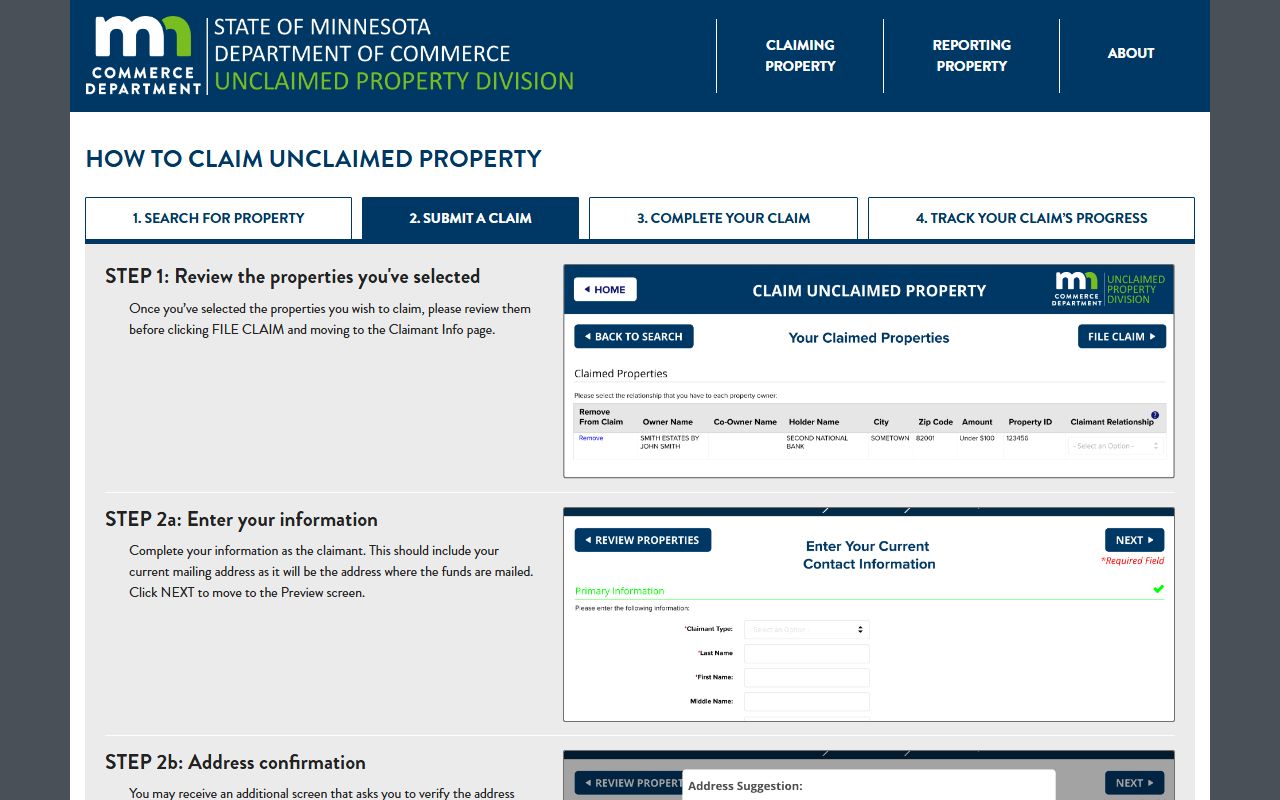
The how-to-claim page above walks through the full submission process and explains what documents are typically needed for different claim types.
Nearby Counties
These counties border Mower County and use the same state unclaimed property system.