
Itasca County Unclaimed Money
Itasca County residents may have unclaimed money held by the state of Minnesota right now. The Minnesota Department of Commerce collects dormant bank accounts, uncashed checks, forgotten insurance payouts, old utility deposits, and other financial assets that companies can no longer link to their owners. Anyone can search the database for free, and filing a claim costs nothing. People in Grand Rapids and across Itasca County are often surprised to find property waiting in their name.
Itasca County Overview
Finding Itasca County Unclaimed Money
All unclaimed money in Minnesota is managed at the state level. Itasca County does not run its own unclaimed property database, and no county office handles these funds. When a bank, insurer, utility, or other business loses contact with a customer at an Itasca County address, it must report those assets to the Minnesota Department of Commerce after the dormancy period passes. The state holds the money indefinitely until the rightful owner or heir files a claim.
The Itasca County official website handles county government services but does not track unclaimed property. You can visit the county site for local tax records, court information, and other municipal matters. For unclaimed money, the state portal is the only place to search.
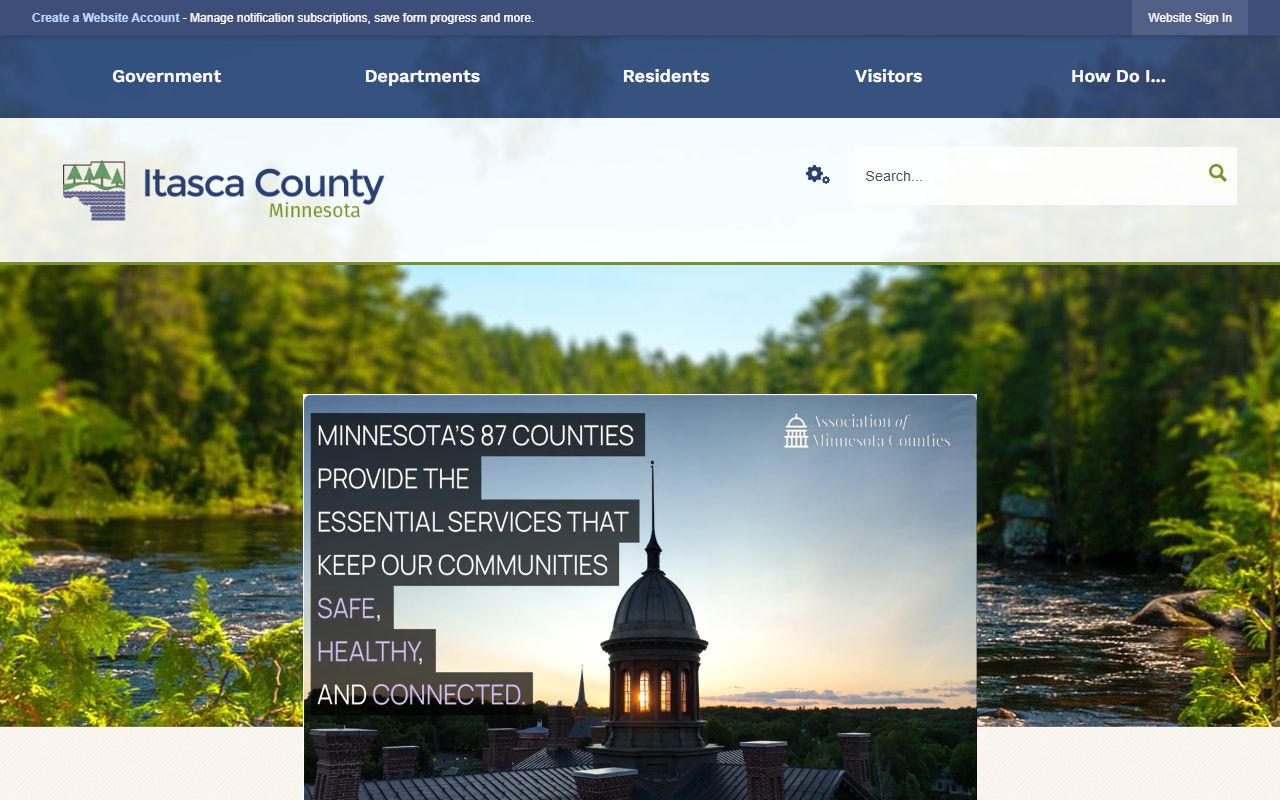
The screenshot below shows the Itasca County government homepage, a useful resource for local services. For unclaimed funds, head directly to the state search portal.
The main state portal is at minnesota.findyourunclaimedproperty.com. This is where you search, start a claim, and track its progress. It works on phones and computers. You don't need to create an account to search.
How Itasca Residents Search the Database
Go to minnesota.findyourunclaimedproperty.com and enter your last name in the search box. Results come back quickly. Try every version of your name. If you've been married, divorced, or gone by a nickname at any point, search all of those separately. Many Itasca County residents miss property because they only search their current legal name.
Business owners should search old company names too. Dissolved partnerships, closed LLCs, and former corporations can all have unclaimed assets on file with the state. Enter the full legal name and also try shortened forms of the name. The state database holds property reported by companies all over the country, so a business you ran years ago in Itasca County could have a balance sitting there.
Another option is MissingMoney.com, the national database endorsed by the National Association of Unclaimed Property Administrators. This site searches multiple states at once. If you've lived in Wisconsin, Michigan, or any other state before settling in Itasca County, the national search can surface money from those places. Don't pay anyone to search for you. The state tool and MissingMoney.com are both free.
Types of Unclaimed Property in Itasca County
Dormant bank accounts are the most common source of unclaimed property. When an account holder stops using an account and doesn't respond to bank outreach for three years, the bank must transfer the balance to the state. This applies to checking accounts, savings accounts, and certificates of deposit. The bank isn't penalized. They're following the law.
Uncashed checks are another major category. These show up in many forms. A former employer may have sent a final paycheck to an old Grand Rapids address. A class action lawsuit may have issued a settlement check that never got cashed. A utility or retailer may have mailed a refund that was lost or set aside. These checks sit as unclaimed property until the payee comes forward.
Insurance benefits are a significant source, especially life insurance. When a policyholder dies and the insurance company can't locate the beneficiaries, the death benefit goes to the state. Annuity payments, premium refunds, and health insurance overpayments also end up in the unclaimed fund. Stock dividends, mutual fund distributions, and brokerage account balances are reported by financial institutions as well. Safe deposit box contents are turned over after five years of no activity, and those items can include jewelry, coins, currency, and personal documents. Most other types of property have a three-year dormancy period under Minnesota Statutes Chapter 345.
Roughly 1 in 7 people have some unclaimed property. The average claim runs about $2,080.
How to Claim Itasca County Unclaimed Money
The process has four steps. Search the state database first and find property in your name. Then start a claim online through the state portal. Next, complete the verification by submitting any required documents, most commonly a government-issued photo ID. Finally, track your claim using the Claim ID number you receive after filing.
For straightforward claims, a photo ID is often all you need. If you're claiming property on behalf of someone who has passed away, the state will ask for a death certificate and documents showing you're the legal heir or executor of the estate. This might include a copy of the will, letters testamentary, or other probate paperwork. The state reviews each claim individually, so requirements can vary based on the type of property and the amount.
Processing takes up to 90 days. You don't need to call before the 90-day window closes. If time has passed and nothing has moved, reach out to the Minnesota Department of Commerce at 651-539-1545 or toll-free at 1-800-925-5668. You can also email unclaimed.property@state.mn.us or write to Minnesota Commerce Department, 85 7th Place East, Suite 280, St. Paul, MN 55101. The claim process is governed by Minnesota Statutes §345.41. There are no fees at any stage. The state holds property with no expiration, so old claims are still valid.
Minnesota Unclaimed Property Law
Minnesota Statutes Chapter 345 governs unclaimed property across the state, including Itasca County. It sets dormancy periods, reporting deadlines, and the rules for how the state manages assets once they arrive. Banks, insurers, utilities, and other businesses must report assets by November 1 each year. Life insurance companies have an earlier deadline of October 1.
Before reporting property to the state, holders are required to try to reach the owner first. If the property is worth $100 or more, they must send written notice at least 120 days before the report date. This gives owners a window to claim their property directly from the holder before it transfers to the state. Many people aren't aware of this step and may receive a letter from a financial institution that they mistake for junk mail. Those notices are worth reading carefully.
Businesses that fail to comply with Chapter 345 face penalties under Section 345.55. Willful violations can be charged as a gross misdemeanor, and the state charges 12% interest on any amounts wrongly withheld. A 2019 law change also requires the state to pay interest on interest-bearing property held in the unclaimed fund, which means some older claims may now have additional value beyond the original amount reported.
Additional Resources for Itasca County Searches
The NAUPA Minnesota profile gives an overview of the state's unclaimed property program and links directly to the search portal. NAUPA's national site lets you find programs in other states if you've lived elsewhere. Both are free and run by a nonprofit organization that works with state administrators across the country.
The Minnesota State Auditor's unclaimed property guidance is aimed at local governments, but the information on how property gets reported and transferred is useful for anyone trying to understand how the system works. If you're involved in a federal bankruptcy case, check the U.S. Bankruptcy Court for Minnesota unclaimed funds list, since those assets are separate from the state database and won't appear in the Commerce Department search.
Itasca County Unclaimed Property by Type
Bank accounts make up the biggest portion of unclaimed property statewide. A checking or savings account that sits inactive for three years triggers a transfer to the state. Certificate of deposit accounts work the same way. Many of these belong to people who moved away from Itasca County and never updated their address with their bank.
Uncashed checks come from many sources. Payroll checks are common, especially for people who changed jobs and didn't receive a final payment at a current address. Insurance refund checks, government benefit checks, and customer refunds from retailers all end up in the unclaimed fund too. Some of these are small. Others are substantial. The state holds all of them the same way, with no minimum amount required to file a claim.
Life insurance and annuity benefits are often unclaimed because beneficiaries don't know a policy exists. When a policyholder dies without telling family members about coverage, the insurance company may exhaust its efforts to find heirs and then transfer the benefit to the state. Stock dividends and securities are another significant category. Investors who forgot about old brokerage accounts, inherited shares, or moved without updating their contact information frequently have unclaimed dividends waiting. Safe deposit box contents take five years to become reportable, but once turned over, the items are inventoried and stored by the state until a claim is filed.
Nearby Counties
These counties share borders with Itasca County. All use the same state unclaimed property system.