
Grant County Unclaimed Money
Grant County residents can search for unclaimed money through the Minnesota Department of Commerce's statewide portal, which holds funds from dormant bank accounts, uncashed checks, old insurance benefits, and many other asset types tied to Grant County names and addresses. Minnesota manages all unclaimed property at the state level. There is no Grant County database to check separately. Searching is free and open to anyone. Claiming property is also free, and the state holds everything indefinitely.
Grant County Overview
How Grant County Unclaimed Money Works
Minnesota runs a single, centralized unclaimed property system. When businesses that operate in Grant County lose contact with customers, those dormant funds must be reported to the Minnesota Department of Commerce after the required dormancy period. The state acts as custodian. The money stays in the database under the owner's name until someone steps forward with a valid claim.
Grant County itself does not maintain any unclaimed property records. The Grant County official website covers county services, local offices, and public records, but unclaimed property from banks, insurers, and other private businesses is handled entirely by the state.
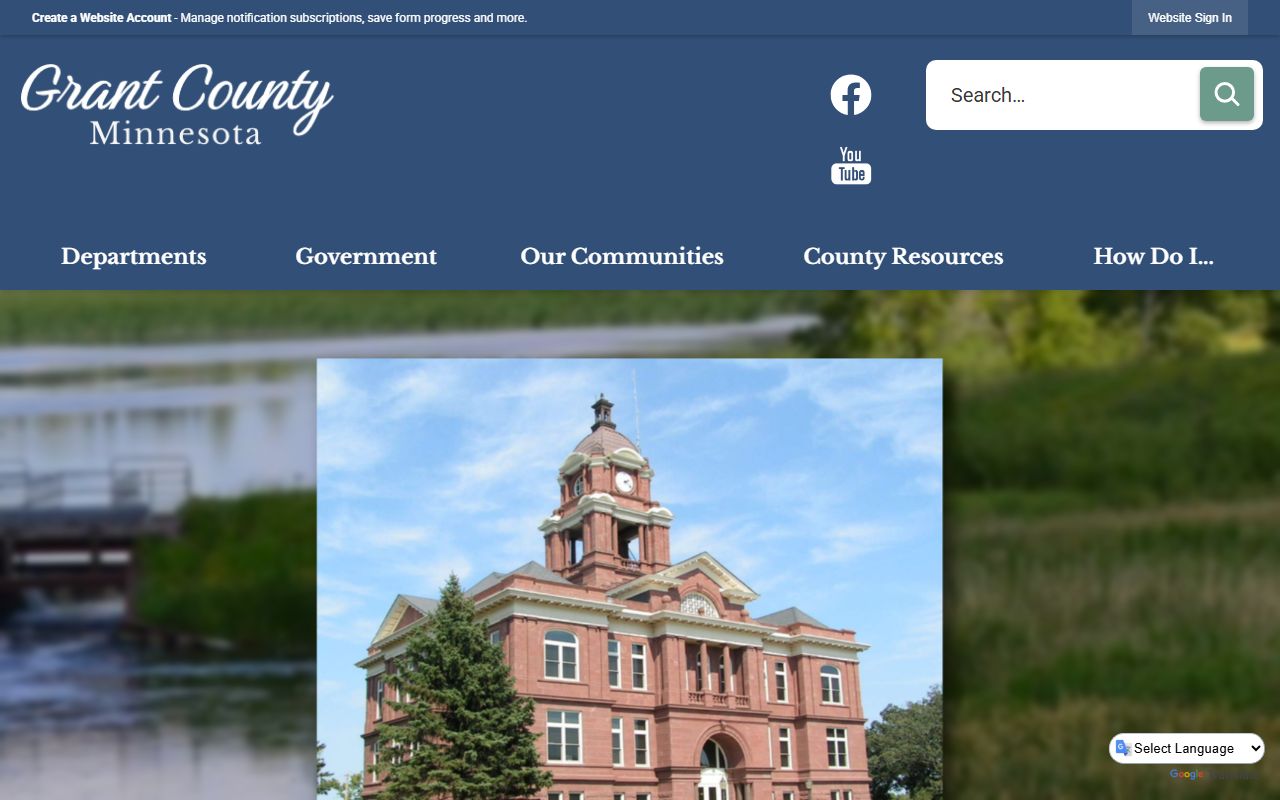
The Grant County government homepage is shown below. It is the right place for county government questions, but for unclaimed money, the state portal is the place to go.
The Minnesota state portal at minnesota.findyourunclaimedproperty.com is the official tool for searching and claiming all unclaimed money in Grant County and across the state.
Searching the Grant County Unclaimed Property Database
Go to the state portal. Type in your last name. No account is required. The database is public and open to anyone. Search results appear within seconds and include the property type, the holder company name, and a value range. Review every result under your name, not just the first one or two.
Name variations are important. Try your maiden name if you've had one. Try alternate spellings. Try first and last name separately if your last name is common in the area. People consistently miss unclaimed money because they only search their current legal name. Financial records follow the name that was on file when the account or policy was last active, which may be very different from what you go by today.
If you've ever owned a business in Grant County, search those names too. Sole proprietorships, closed LLCs, and old farm operations can have unclaimed property. Run both the full legal name and any trade names the business used.
For a broader search, try MissingMoney.com. It searches multiple states at once. If you've lived outside Minnesota, you may have unclaimed property in another state's database. This site is free, endorsed by NAUPA, and requires no registration. Don't pay a search service or finder's fee. The data is free and accessible through official channels.
Types of Unclaimed Property in Grant County
Dormant bank accounts are the most common type. Checking accounts, savings accounts, money market accounts, and certificates of deposit that go inactive for three years must be reported to the state once the bank has attempted and failed to contact the owner. The account balance transfers, but the owner's name stays in the state database. The money is recoverable at any time.
Uncashed checks come from a wide range of sources. Old payroll checks, utility company refunds, stock dividend checks, class action settlement payments, and retailer rebate checks all become unclaimed when they go uncashed long enough. People move. Addresses become outdated. A check sent to an old address gets returned or never deposited. Eventually the issuer reports it to the state.
Insurance proceeds make up another major portion of the state's holdings. Life insurance death benefits go unclaimed when the beneficiary isn't aware the policy exists. The insurance company searches for the beneficiary, and if they can't locate them within the required period, the death benefit goes to the state. Annuity contracts, premium refunds, and accident settlements follow similar paths. Brokerage accounts, mutual fund balances, and stock certificates also end up in the database when account holders stop responding to outreach.
Safe deposit box contents have a five-year dormancy period before being transferred. Most other property types run on a three-year clock. Minnesota Statutes Chapter 345 sets all of the rules, including a 2019 amendment requiring the state to pay interest on interest-bearing property. Holders must file annual reports by November 1, with life insurance companies filing by October 1.
Claiming Grant County Unclaimed Money
The claim process is straightforward and free at every step. Search the portal. Find property in your name. Click to begin a claim and follow the steps. The portal explains exactly what documents to upload or mail. For standard personal claims, a government-issued photo ID is all that's typically needed.
Heir and estate claims involve more paperwork. If you're filing for property belonging to a person who has died, you'll need a death certificate plus documentation showing your legal standing. That could be letters testamentary, a court order appointing you as administrator, or a notarized affidavit of heirship depending on the size of the estate and whether it went through probate. The state reviews each case and may ask for more documents.
Allow up to 90 days for processing. Most claims resolve faster, but that's the standard window. After 90 days with no update, call 651-539-1545 or toll-free 1-800-925-5668. Email is unclaimed.property@state.mn.us. Mail documents to Minnesota Commerce Department, 85 7th Place East, Suite 280, St. Paul, MN 55101. Claim requirements are in Minnesota Statutes §345.41. There are no filing fees and no minimum claim amount.
Minnesota Unclaimed Property Law
Minnesota Statutes Chapter 345 governs all unclaimed property in Minnesota, including Grant County. The law defines what counts as unclaimed property, sets the dormancy timelines, and requires holders to report on schedule. It also establishes the state's role as custodian and the owner's right to claim at any time.
Holders with property worth $100 or more must send written notice to the owner's last known address at least 120 days before filing their annual report. This gives the owner a window to respond and recover their property before the transfer. Skipping this step means the holder is out of compliance. Most holders file by November 1 each year. Life insurance carriers have an October 1 deadline.
Noncompliant holders face stiff penalties under Minnesota Statutes §345.55. Willful failures to report can be prosecuted as a gross misdemeanor. The state can also charge 12% interest on amounts that were wrongly held back. These rules apply to businesses, not to individuals searching for and claiming their own property.
Additional Resources for Grant County Residents
The NAUPA Minnesota profile provides an overview of the state's program and links to the official search tool. MissingMoney.com is the best free tool for searching multiple states at once. The NAUPA national site links to all 50 state unclaimed property programs if you need to search elsewhere.
The Minnesota State Auditor's unclaimed property page explains how public entities handle unclaimed funds and provides useful background. If you think you have funds tied to a federal bankruptcy case in Minnesota, check the U.S. Bankruptcy Court for Minnesota's unclaimed funds list. That list is separate from the state system and covers court-administered funds from settled bankruptcy cases.
Grant County Unclaimed Property Value
Grant County is a smaller county, but that doesn't mean fewer opportunities to find unclaimed money. The state database includes names tied to Grant County from decades of banking activity, insurance policies, utility accounts, and investment accounts. Even in smaller communities, accounts get forgotten, checks go uncashed, and policies go unclaimed.
Nationally, about one in seven people has some form of unclaimed property. The average claim value runs around $2,080, though individual amounts vary widely from a few dollars to many thousands. The state has no minimum threshold for filing a claim. Small claims are just as welcome as large ones. Every dollar returned is a dollar that rightfully belongs to someone.
Check the portal regularly. New property gets reported on a rolling annual cycle. A name that shows no results today may have a match after the next round of annual filings. It takes only a few minutes each time you search, and the search is completely free.
Nearby Counties
Residents near Grant County's borders may find it helpful to search neighboring county records as well.